
Holmes Dyer’s client, a not-for-profit housing provider, has been provided access to land from Housing Tasmania and the Brighton Council in various locations for the purpose of undertaking development in support of the objectives set our in the Bridgewater-Gagebrook Master Plan. At its core this Master Plan seeks the development and redevelopment of land within the suburbs of Bridgewater, Herdsmans Cove and Gagebrook as part of the broader renewal exercise to provide a greater diversity in housing stock aimed at providing affordable housing.
The Master Plan looks to increase community connectedness and resilience, improve safety and public realm quality and use, and to provide a population to support existing, and underpin enhanced future services such as banks, shops, medical facilities, cafes, schools and jobs.
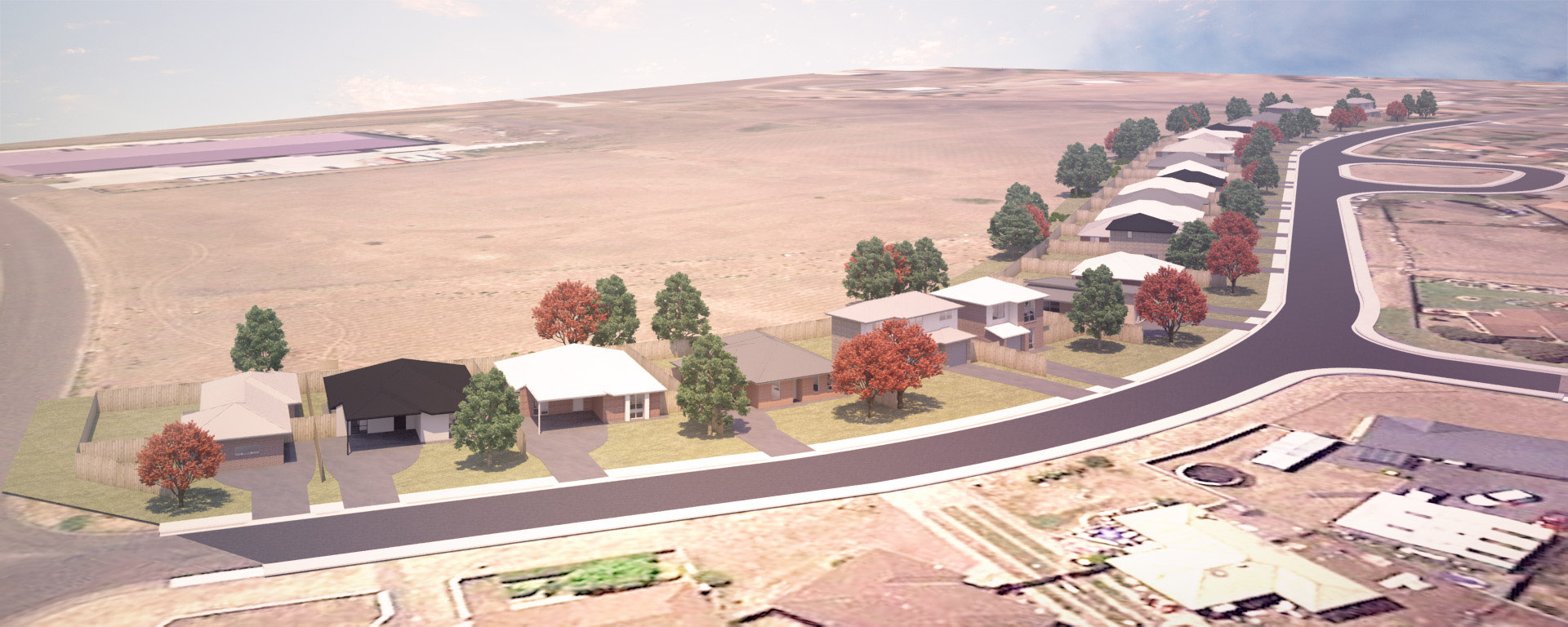
A key site for development was a strip of land along Taylor Crescent at Bridgewater. Owned in the main by Council with a small portion in ownership to Housing Tasmania. Holmes Dyer worked with all parties to achieve agreement to the overall proposal, and thus each party’s agreement to have its land considered as part of this proposal. Holmes Dyer also worked with the client and Council to agree the terms of the land sale on a basis that was fair and equitable, and with Housing Tasmania on the timing of the transfer of its section of the land.
The land was initially zoned Open Space (the land in Council ownership) and Industrial (the land in Housing Tasmania ownership). To enable their required residential development to occur in line with the Master Plan and in support of objectives contained within the Council’s and Region’s strategic plans, there was a need to rezone the land to residential.
Holmes Dyer carefully considered the site’s context and surrounding land uses and zones, and prepared a combined rezoning proposal and permit to rezone the land General Residential and to effect a boundary realignment.
In support of the rezoning proposal, Holmes Dyer drafted a rezoning instrument for the Council and TPC to consider and to underpin community consultation and input. This instrument included not only an outline of the proposed zoning and rationale, but also included investigations setting out fully all social, economic, aboriginal, environmental, hazard and risk, traffic and infrastructure, and planning issues, demonstrating how the zoning would manage these and demonstrating its appropriateness. It also assessed the proposal against the relevant Interim Planning Scheme and the various statutory requirements of the Land Use and Planning Approvals Act 1993 and all other relevant legislation.
Furthermore, Holmes Dyer also worked on the associated Part 5 agreement to ensure that the Condition of Approval for a landscaping buffer was assured.
The land was successfully rezoned and has since been developed with 27 detached dwellings.
Key Capabilities
- Urban Design & Concept Master Planning
- Rezoning Process
- Stakeholder Engagement
