
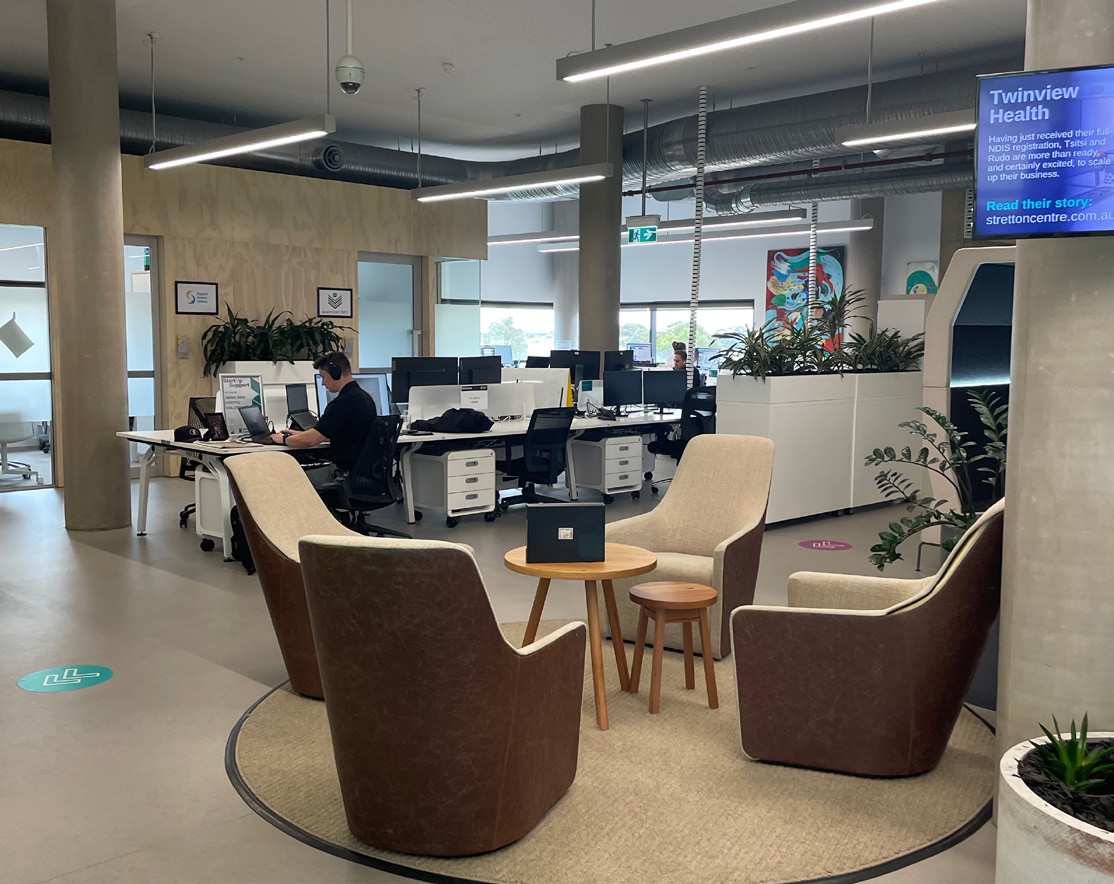
Holmes Dyer was engaged by Tea Tree Gully Council to prepare an investigation paper into the different models and local and national case study examples of coworking and hybrid workspaces.
The coworking paper will be used by Council to inform internal discussions on Council’s role, and the role of coworking to potentially support local business growth, community residents working from home, and the utilisation of existing Council administrative, community and recreation buildings.
The investigations sought to understand key characteristics of coworking spaces, including:
- Models and cost of operation;
- Risk management;
- Locational advantages and barriers; and
- Influence of trends on space usage and configurations.
The investigation paper comprised in-depth market analysis, site visits across both South Australia and new South Wales, and engagement with key commercial and community based coworking space providers and local stakeholders. The investigation paper provided a set of recommendations to guide future decisions of Tea Tree Gully, relating to both coworking and hybrid work support that could meet a service gap for the Tea Tree Gully business and residential community.
Key Capabilities:
• Examined models and cost structures for coworking operations
• Evaluation of emerging trends of space usage and configuration
• Identification of locational advantages and barriers to co-working spaces
• Commercial, community co-working providers, and local stakeholder engagement
